Operation of the Sliding Vane Gas Compressor
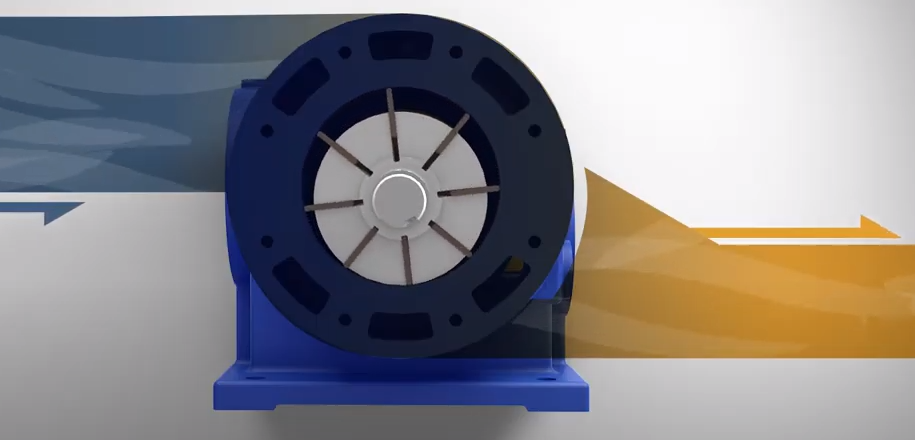
A sliding vane compressor is a positive displacement compressor, meaning it decreases a specific volume of a gas, resulting in increased gas pressure. The sliding vane compressor consists of an external casing called a cylinder, the rotating element inside called the rotor, and sliding vanes. The rotor is eccentrically located in the cylinder.
The rotor has longitudinal slots that hold the vanes. As the rotor turns the vanes slide outward, due to centrifugal force, to reach the inner walls of the cylinder. The vanes will trap a pocket of gas as they pass by the compressor inlet. As the rotor continues to rotate, the volume of that pocket of gas is decreased due to the eccentricity of the rotor.
The volume continues to be compressed until the leading vane reaches the discharge port, where the compressed gas is released. As this rotation and resulting compression is happening, small amounts of oil are being injected into the compression chamber, lubricating and protecting the compressor internals.
The Sliding Vane Compressor Has Many Benefits
Gas Compositions – sliding vanes can handle almost any gas imaginable, including acid, sour, hydrogen or heavy hydrocarbons. Other compressor technologies have limitations to specific elements of the gas stream, most commonly H2S.
A sliding vane compressor is the proper choice when compressing gas streams which are near their dew point (close to condensing to liquids).
Maintaining and Repairing
Unlike many compressor types, most regular maintenance functions on sliding vanes can be performed in the field with a few hand tools.
Casing Materials
Ro-Flo sliding vane’s standard casing materials are NACE compliant.
Operational Expense (OPEX)
Compared to some other compression technologies, the sliding vane has lower power consumption and lower routine maintenance costs
Vibration
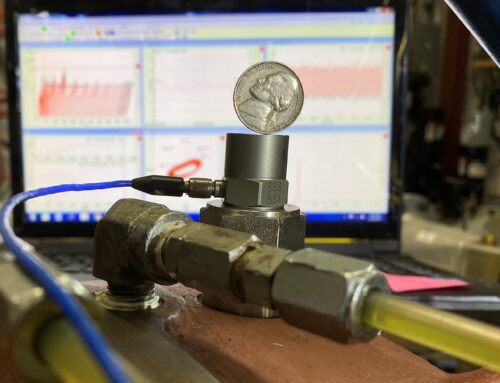
Compared to some other compressor types, the rotary sliding vane is virtually vibration-free, requiring no special pulsation equipment or foundations.
Pressure Ratios
Rotary vane compressors can manage pressure ratios up to 7:1 in a single stage. Maximum Allowable Working Pressure – Ro-Flo sliding vane compressors can operate up to 200 psig.
Lube Oil
When compared to other types of compression, sliding vane compressors consume a small amount of lube oil. Sliding vane compressors can be found all over the world being utilized in numerous oil and gas applications, biogas management, industrial process gas, and vacuum services.
Key Takeaways: Sliding Vane Gas Compressors
- Very flexible on gas type: Sliding vane compressors can handle a wide variety of gas streams — from sour or acidic gases, hydrogen-rich mixtures, to heavy hydrocarbons — which many other compressor types can’t reliably manage.
- Reliable under challenging conditions: They perform well even when compressing gas near the dew point (gas close to condensing), where other compressors might struggle.
- Low maintenance & easy repairs: Field maintenance can be done with just simple hand tools, reducing downtime and repair complexity.
- Lower operating costs (OPEX): Their efficient design reduces power consumption and routine maintenance costs compared to some other compression technologies.
- Low vibration — minimal infrastructure demands: Because they operate virtually vibration-free, there’s no need for heavy foundations or special pulsation equipment.
- Strong single-stage pressure capability: They can achieve a pressure ratio of up to ~7:1 in a single stage, making them effective for many compression applications without complex multi-stage setups.
- Efficient lube-oil use: Compared to many other types, sliding vane compressors consume relatively little lube oil during operation.
- Versatile across industries: These compressors are well-suited for applications ranging from oil & gas and biogas production to industrial process gas, vacuum services, and pneumatic conveying.
Get Started With Ro-Flo Compressors
Think you’re in need of a sliding vane compressor? Trust the experts at Ro-Flo to help you through the purchasing process. Our team has years of experience and is trusted by the top 25 largest oil and gas companies in the world. Contact us today to get started.
Want to learn more?
The overall design and materials used to build a Ro-Flo compressor make it one of the most reliable compressors ever built. Give us a call to discuss how we can meet your needs.