In the oil and gas industry, demand is soaring, but so are the operational challenges. While much of the industry’s attention is currently focused on long equipment lead times and high-tech software, field operators know that day-to-day profitability often comes down to a more fundamental battle: managing harsh, heavy, and wet gas streams without destroying equipment.
Handling gas streams laden with natural gas liquids (NGLs), hydrogen sulfide (H2S), carbon dioxide (CO2), or water vapor is notorious for causing severe maintenance headaches.
We are proud to announce that Ro-Flo Compressors was recently featured in The American Oil & Gas Reporter (AOGR) to discuss how rugged engineering can solve these exact midstream and production vulnerabilities.
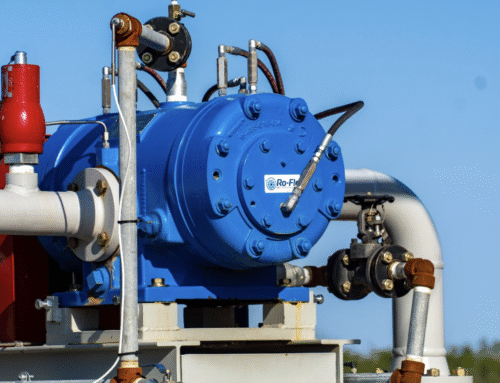
In the feature article, titled AI, Digital Twins Enhance Operations, our Director of Engineering, Travis Sixel, broke down the thermodynamics of why rotary vane compressors (RVCs) are proving to be the lowest-maintenance, most cost-effective choice for modern operators dealing with dirty gas.
Here are the key takeaways from the feature and what they mean for your field operations.
The Thermodynamics of Rugged Reliability
Traditional flooded screw or reciprocating compressors often struggle when gas composition shifts. When heavy components or water drop out of the gas stream, they contaminate the compressor’s lubricating oil. This forces operators into a vicious cycle of replacing expensive synthetic oil filters, and the oil itself, on a weekly or monthly basis.
As Travis Sixel explained to AOGR, Ro-Flo’s rotary vane technology fundamentally flips this problem on its head.
“Rotary vane compressors handle wet or heavy gases with minimal maintenance because they drive the heat generated by compression into the gas. This keeps the liquids in vapor form rather than allowing them to drop out and contaminate the compressor’s lubricating oil.”
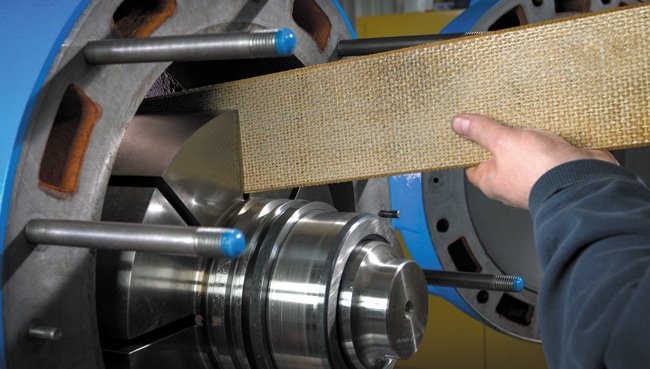
By keeping liquids in a vapor state, the lubricating oil remains completely clean. Furthermore, because RVCs utilize standard, highly affordable mineral R&O oil rather than expensive synthetics, the long-term operational savings are massive.
The “Rule of Thumb” for Heavy Gas
While clean, dry gas applications are often well-served by alternative technologies, Sixel shared a critical rule of thumb for packagers and operators: If a gas stream’s molecular weight exceeds 30, it’s time to look at an RVC. At that point, the drastically lower operating and maintenance costs quickly offset the initial capital investment.
Where Ro-Flo RVCs Are Moving the Needle
The AOGR feature highlighted several critical applications where Ro-Flo units are currently maximizing uptime across major plays like the Permian Basin, the Bakken, and the conventional fields of California:
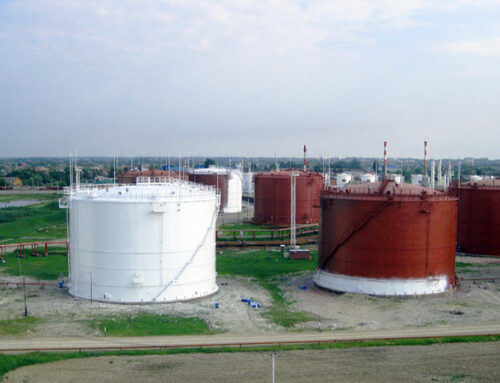
- Vapor Recovery Units (VRUs): The most common application for RVCs is recovering high-value vapors from oil storage tanks and depressurizing oil/gas separators at the wellhead. This reduces backpressure on the well, directly improving oil production.
- Mitigating Carbonic Acid in CO2 EOR: When water condenses in the presence of carbon dioxide, it forms highly corrosive carbonic acid, which usually requires exotic, expensive metallurgy to withstand. Because Ro-Flo units keep water from condensing inside the compressor, carbonic acid never has the chance to form.
- Reciprocating Compressor Boosters: RVCs have no internal valves, eliminating the risk of retrograde condensate forming as gas passes through. By using a Ro-Flo unit as a low-pressure booster (up to ~50 psi), operators prevent heavy gas components (like BTEX) from condensing and causing valve sticking or failure in downstream reciprocating units.
Real-World Performance That Speaks For Itself
At the end of the day, field reliability is the only metric that matters. Sixel shared a striking example of a Ro-Flo customer operating a fleet of about 80 RVCs: “The customer has gone four years without requiring any major maintenance on the equipment. The only thing he has had to do is fill the oil tank.”
It is this level of predictability that has allowed Ro-Flo to build a trusted installation base with industry leaders like ConocoPhillips, XTO, Targa Resources, and California Resources Corp., both onshore and offshore.
Read the Full Feature
From tackling liquid dropouts to optimizing capital costs on reciprocating booster stages, the latest AOGR sneak peek offers a deep dive into the engineering strategies shaping the future of gas compression.
Check out the full article on The American Oil & Gas Reporter website: AI, Digital Twins Enhance Operations.
Ready to see how rotary vane technology can lower your operating costs and eliminate weekly oil changes? Explore our Rotary Vane Compressor Lineup or contact the Ro-Flo engineering team today to evaluate your specific needs.